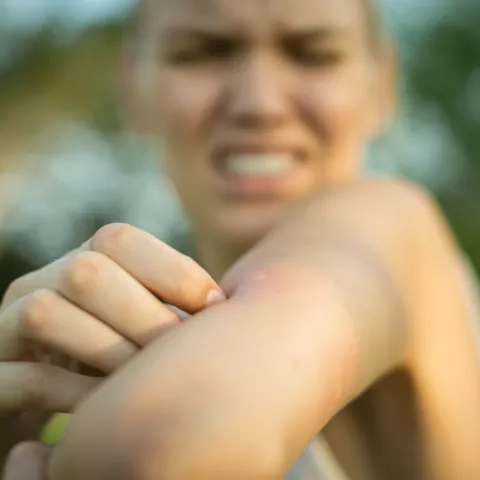

Mosquitoes
Learn what you can do around your home and when you are outdoors to reduce your risk of bites
In Wellington-Dufferin-Guelph, the risk of becoming seriously ill from a mosquito-borne disease is low, but it’s important to take steps to protect yourself and your family. Public Health works year-round to reduce mosquito populations and lower the risk of mosquito-borne illness in our communities.
There are simple steps you can take to reduce mosquitoes around your home and lower your chance of being bitten. Focusing on standing water and protecting yourself outdoors are the most effective ways to reduce risk.
Reduce mosquito breeding around your home
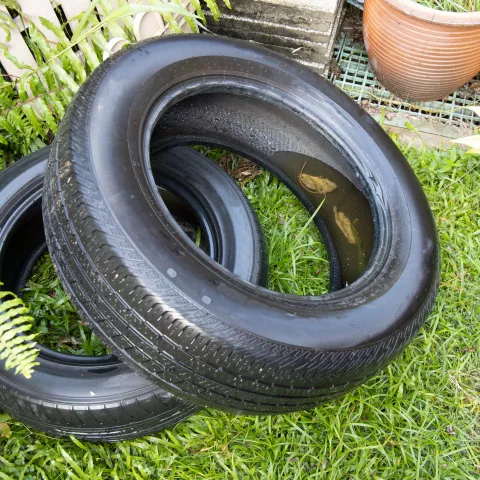
Mosquitoes lay their eggs in standing water. Removing or treating standing water is the most effective way to reduce mosquito numbers.
You can help by:
- Draining flowerpots, buckets, and kiddie pools when not in use
- Changing bird bath water every few days
- Keeping eavestroughs clear and flowing
- Treating decorative ponds, fountains, or unused pools with a commercial mosquito larvicide (such as AquaBac)
- Reporting standing water concerns on private property (see below)
- Having municipally-owned residential catch basins on your property treated at no cost (see below)
- Reporting dead birds to the Canadian Wildlife Health Cooperative (CWHC) (see below)
Standing water on private property, such as unmaintained ornamental ponds or swimming pools, can increase mosquito breeding.
Complaints about standing water can be directed to the Property Standards or By-law Enforcement Department in the town or municipality where the property in question is located.
| Investigating Agency | Contact Information |
|---|---|
| City of Guelph | Contact the Property Standards Inspection Department at (519) 837-5615 ext. 2526 |
| Centre Wellington | Submit a water concern online, in person at the Municipal Office at 1 MacDonald Square, Elora, ON, N0B 1S0 or by telephone (519) 846-9691 ext. 237 |
| Town of Orangeville | Submit by email to bylaw@orangeville.ca, or by calling the town at (519) 941-0440 |
| Wellington North | Submit online through the contact us form, or by telephone at (519) 848-3620 |
| Town of Minto | Contact the Town of Minto Property Standards By Law Enforcement Department by phone (519) 338-2511 ext. 236 |
Standing water complaints for all other areas can be directed your local municipality.
If you have a municipally owned catch basin on your property and would like it treated at no cost, please complete and submit our waiver form in the spring. If your catch basin was treated last year, you will receive a letter and waiver form for re-treatment ahead of the next summer season. Treating catch basins helps stop mosquitoes before they become biting adults.
Catch Basin Larvicide Treatment Waiver Form
What is a catch basin?
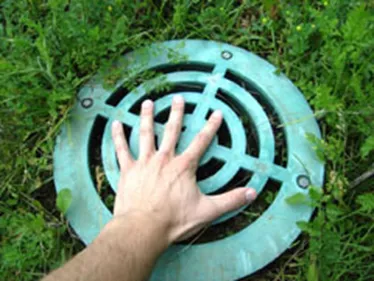
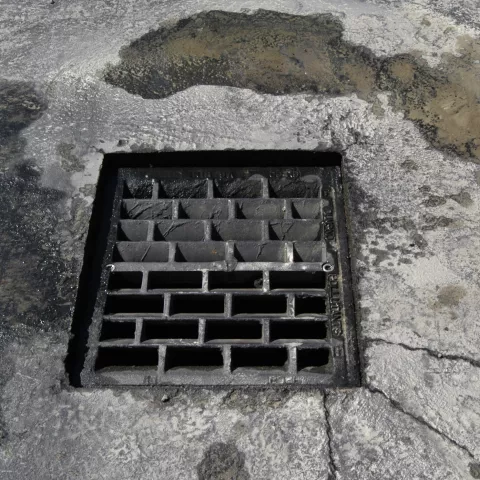
Catch basins are part of the public sewer system and are usually located along curbs or in areas where water pools after rain. They collect water after rainfalls and when snow melts. Because they can hold water for long periods, they are a common breeding area for mosquitoes.
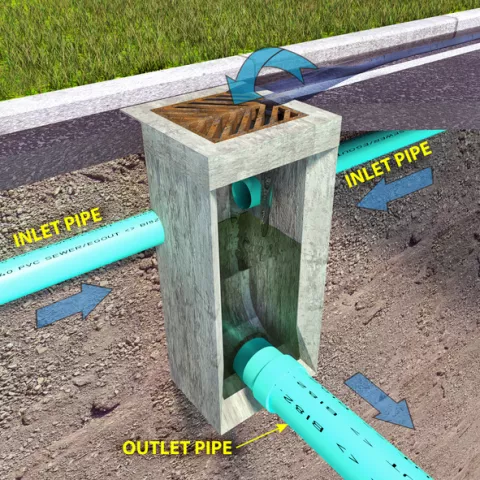
Typical backyard catch basins look like this:
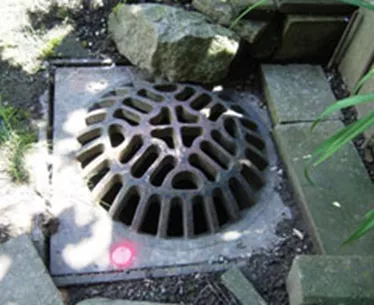
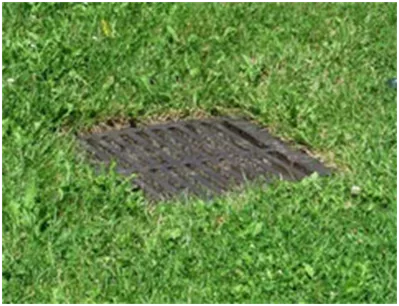
This is not a catch basin:
Public Health does not collect birds for West Nile virus surveillance, however certain dead birds may be submitted to the Canadian Wildlife Health Cooperative (CWHC) at the Ontario Veterinary College under certain circumstances, and depending on the physical condition of the bird.
CWHC may accept:
- Birds of prey and water birds (hawks, owls, eagles, ospreys, herons, loons, etc.)
- Songbirds (e.g., robins, finches, chickadees, warblers)
- Corvids (crows, ravens, blue jays)
CWHC assesses each submission request on a case by case basis, so please call ahead to discuss the situation. Casual drop-offs are not accepted. For more information, call the CWHC at 1-866-673-4781 or 519-824-4120 ext. 54662.
Reduce mosquito bites
You can also lower your chances of getting bitten by:
- Wearing light-coloured clothing, including long sleeves and pants
- Avoiding being outdoors at dawn and dusk, when mosquitoes are most active
- Using an insect repellent with DEET or Icaridin approved by Health Canada for adults and children over 6 months
Mosquito Management in our Community
Catch Basin Larvicide Treatment Waiver Form